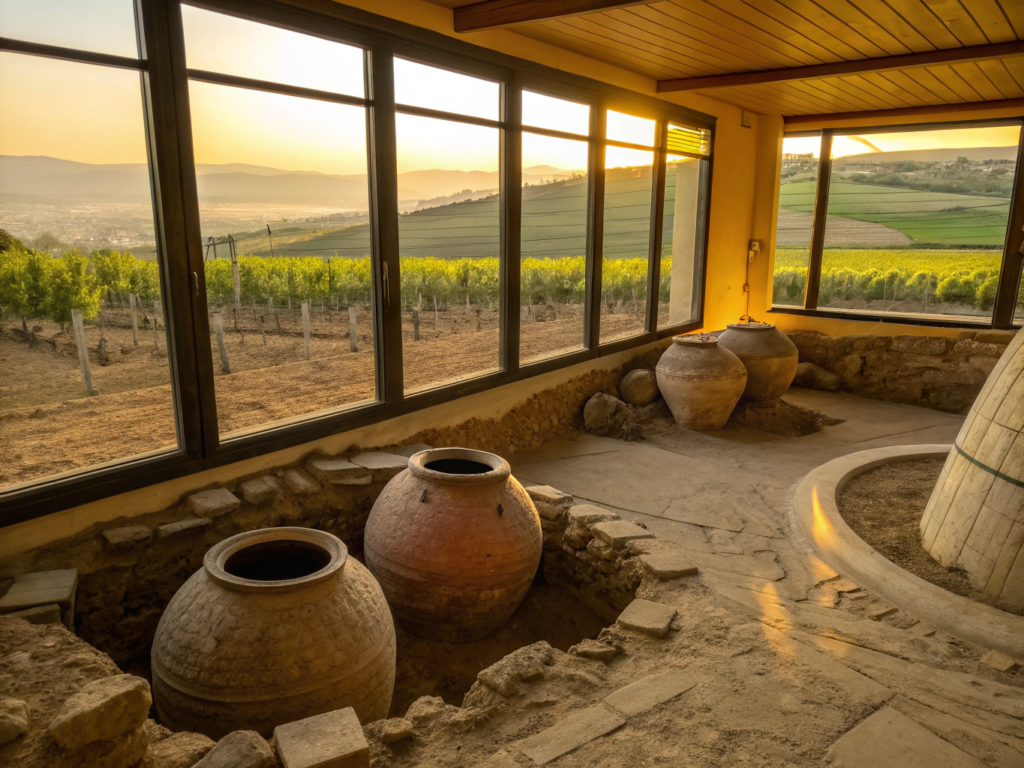
Long before oak barrels reached Europe, Georgian families were burying egg-shaped clay vessels in their cellar floors and filling them with crushed grapes. Eight thousand years later, the qvevri is still the heart of Kakheti winemaking, and it is recognised by UNESCO as an intangible cultural treasure.
From harvest to burial
During the rtveli harvest in September and October, grapes are pressed and poured into the qvevri together with their skins, stalks and seeds. The vessel is sealed with a stone lid and clay, then left alone through the winter. The earth keeps the temperature steady, and the wine makes itself.
The day of unsealing
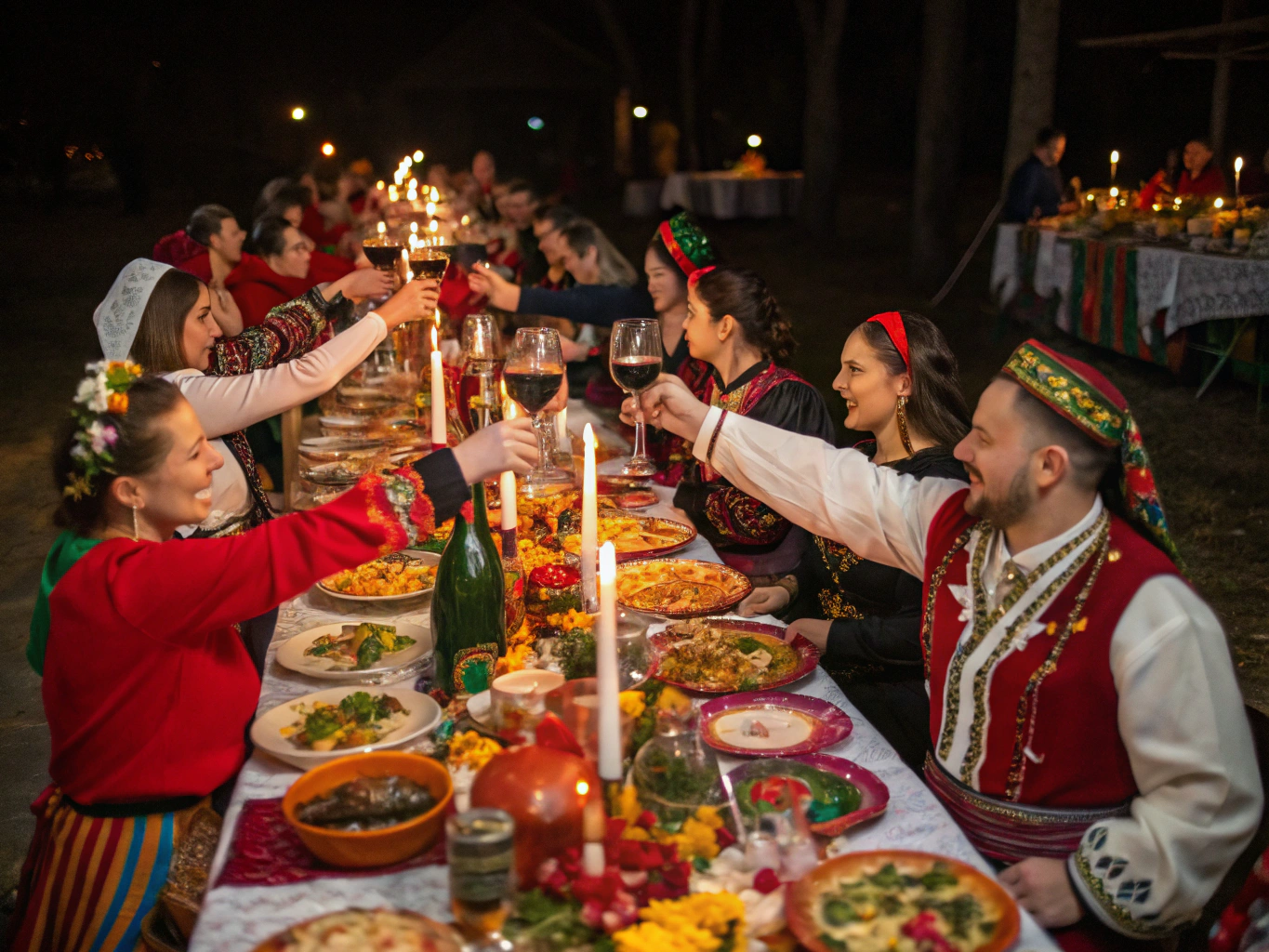
In spring the family gathers to open the qvevri. Neighbours arrive, a first glass is poured for the table, and a toast is made to those who have gone before. For our guests, being invited into a family cellar for this ritual is often the most memorable hour of a journey.
Tasting the difference
Amber wines from Rkatsiteli and Kisi have a grip, a savoury depth and a long finish that surprise first-time visitors. Reds from Saperavi are inky and bright at once. Ask your guide to pour a young and an aged bottle side by side.
Our Kakheti itineraries include private cellar visits with small family producers, never large tasting rooms, so you can see the work up close and ask every question you have.